






Towing Education
How to Set the Right Tongue Weight for Car Haulers and Race Trailers
Transporting vehicles can be an interesting experience for drivers. The right weight placement within a trailer and the proper tongue weight can ensure a smooth ride.
Learn how to set the right tongue weight for car haulers and race trailers below.
Do Car Haulers and Race Trailers Require a Different Tongue Weight Setup?
Yes, car haulers and race trailers can require different tongue weight setups. The tongue weight for a car trailer varies depending on how many cars are being towed and what additional cargo is within each trailer.
What to Know About Car Haulers’ Weight and Size
Depending on the type, car hauling trailers can weigh a couple of thousand pounds on their own. Add a car, which on average weighs around 4,000 pounds, and it becomes around 6,000–7,000 pounds.
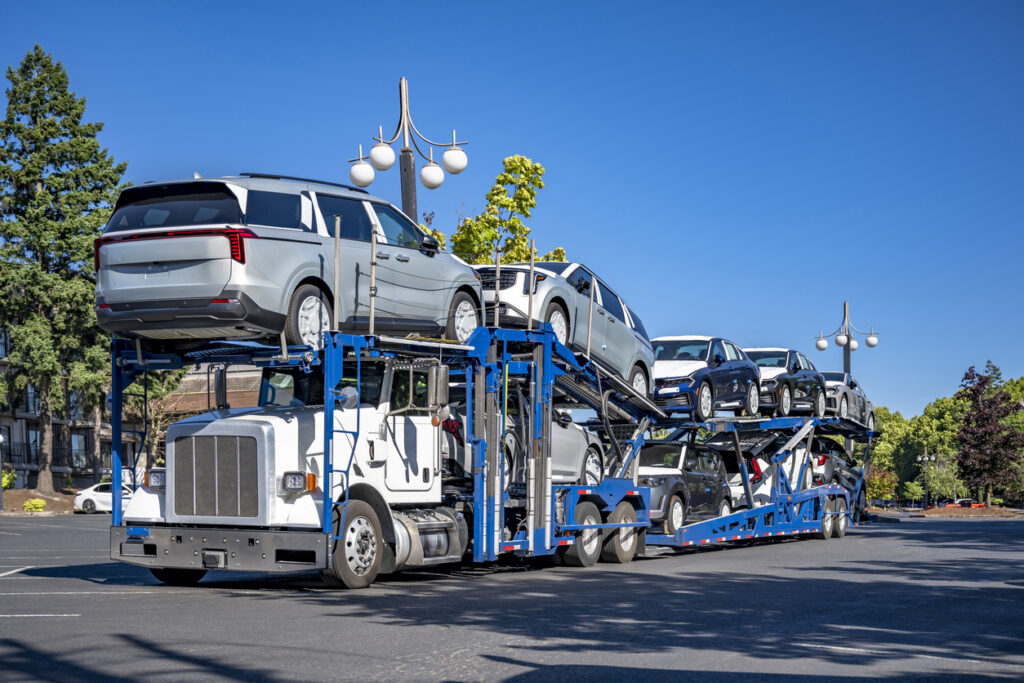
A car haul trailer can hold up to 4–8 cars, depending on their size, which can easily extend past 30,000 pounds.
What to Know About Race Trailers’ Weight and Size
A race trailer may only hold one car, but that doesn’t necessarily represent its entire load. Many race trailers include storage cabinets. Additionally, most race trailers are enclosed, which adds to their overall weight.
So, on its own, a single race trailer can weigh 3,000–5,000 pounds depending on its specifications.
A race car can weigh a couple of thousand pounds, based on the type, leaving the total trailer weight at 5,000–7,000 pounds.
What Makes Tongue Weight More Sensitive on Car Haulers and Race Trailers?
The biggest factor that makes tongue weight more sensitive on car haulers and race trailers involves weight distribution.
Cargo is often made of multiple objects, which you can pack to ensure the weight is spread out throughout the trailer. However, you can’t do that with a vehicle—even when transporting multiple vehicles.
Instead, you are dealing with concentrated weight.
Why Concentrated Weight Matters
Concentrated weight matters because its placement significantly affects how your trailer behaves while driving. Your car trailer’s tongue weight should account for 10–15% of the gross weight of your trailer to ensure it’s balanced with the cargo, correct?
Well, if your concentrated cargo is put in the wrong place, the trailer will be unbalanced—even if you have the right tongue weight.
Example 1
You’re transporting a single car, and it’s directly over the axle. The rest of the trailer is empty. The wind blows to the right; the trailer follows.
However, the tires are facing forward—this means it’s not feeding the wind’s force. In fact, it cancels it out. If the tires continue to push against the force, the trailer will then start moving to the left.
The result is your trailer swinging back and forth until there is no energy left (because you stopped moving).
Example 2
In this scenario, the car is at the end of the trailer. The first problem is that the back weight causes the front of the trailer to lift and tug at the hitch—creating a negative tongue weight.
The trailer starts swaying again due to the wind.
Now the problem is that the weight of the car has created an unbalanced trailer.
This will cause the trailer to continue to the right unless the tires can overpower the original force of the wind.
Example 3
The car is in the front area of the trailer in this example, which causes downward pressure on the hitch. When the wind blows and the trailer sways, the force of the tire direction actually makes it harder for the trailer to sway because the weight is on the front tires.
The extra weight from the car makes swaying minimal, if at all.
What Is the Ideal Tongue Weight Range for a Car Hauler or Race Trailer?
The ideal tongue weight range for a car hauler or race trailer varies considerably based on how many cars, passengers, and other cargo are included.
For example, you’re driving a 2,000-pound car haul trailer with a 4,000-pound car. You weigh 200 pounds and have 20 pounds of gear with you.
2,000 + 4,000 + 200 + 20 = 6,220 gross vehicle weight
The tongue weight should be 10–15% of that:
10% = 622 pounds
15% = 933 pounds
So the tongue weight should be between 620 and 933 pounds.
What’s the Best Way to Measure Tongue Weight for Car Haulers or Race Trailers?
The best way to measure tongue weight for car haulers or race trailers is:
- A trailer tongue weight scale
- A vehicle scale (found near rest stops or dumps)
- The see-saw method
- Online calculators
Learn more about measuring tongue weights.
What Are the Signs of Incorrect Tongue Weight on a Car Hauler or Race Trailer?
There are many signs of incorrect tongue weight on a car hauler or race trailer:
- The trailer is lifting up near the front tires
- The hitch is pointing downward, giving your setup a “V” shape
- The trailer swaying
- Unresponsive trailer while turning
- Losing steering control
- Lack of braking response
Explore more warning signs of improper tongue weight.
When Should Tongue Weight Be Rechecked for Car Haulers and Race Trailers?
The tongue weight for car haulers and race trailers should be checked and rechecked every time you are about to drive. Your gross vehicle weight could change depending on how much equipment you have on each trip.
Keep Yourself and Your Cars Safe with the Right Tools
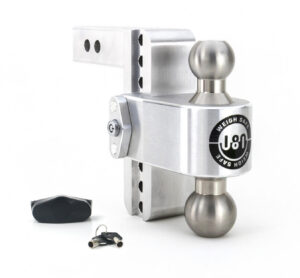
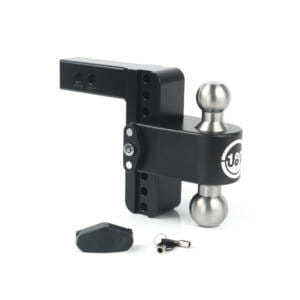
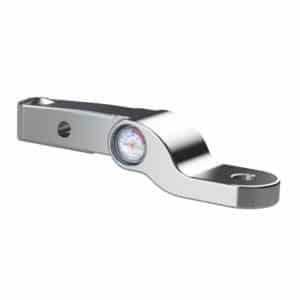
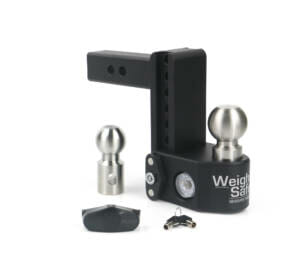
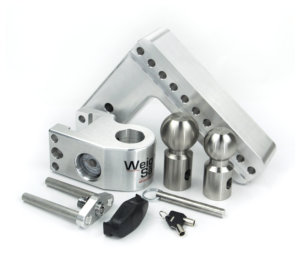
Having the right tongue weight is one part of staying safe while transporting vehicles. Having the right equipment is the other half. Find solid, trustworthy hitches, weight distributors, and other accessories with Weigh Safe.
Browse our catalog before your next trip.
FAQs About Tongue Weight for Car Haulers and Race Trailers
Yes, a car hauler can have too much tongue weight even if it meets the percentage guidelines. This is because the vehicle could be in the wrong spot within the trailer, creating extra pressure.
Yes, moving a vehicle a few inches can change the tongue weight significantly. Going from the center of the trailer to the front can make the difference between swaying and not swaying.
Yes, tongue weight should be measured after the car is strapped down, because you want 10–15% of the gross weight of the vehicle. To measure the tongue weight before that would give you an incorrect number.
You can sway even though the tongue weight looks correct because the vehicle isn’t in the proper position within the trailer, or you’ve turned too hard.
Yes, enclosed race trailers behave differently from open car haulers. Their aerodynamics are different, which affects their behavior.